
The Toyota MR2 SW20 is one of the most unusual cars to come out of Japan in the 1990s. With its mid-engine layout, sharp wedge styling, and turbocharged performance, it delivers a driving experience typically reserved for exotics that cost two or three times as much.
For enthusiasts looking to enter the JDM performance world without Supra-level money, the MR2 is one of the most rewarding options available — if you understand what you're getting into.
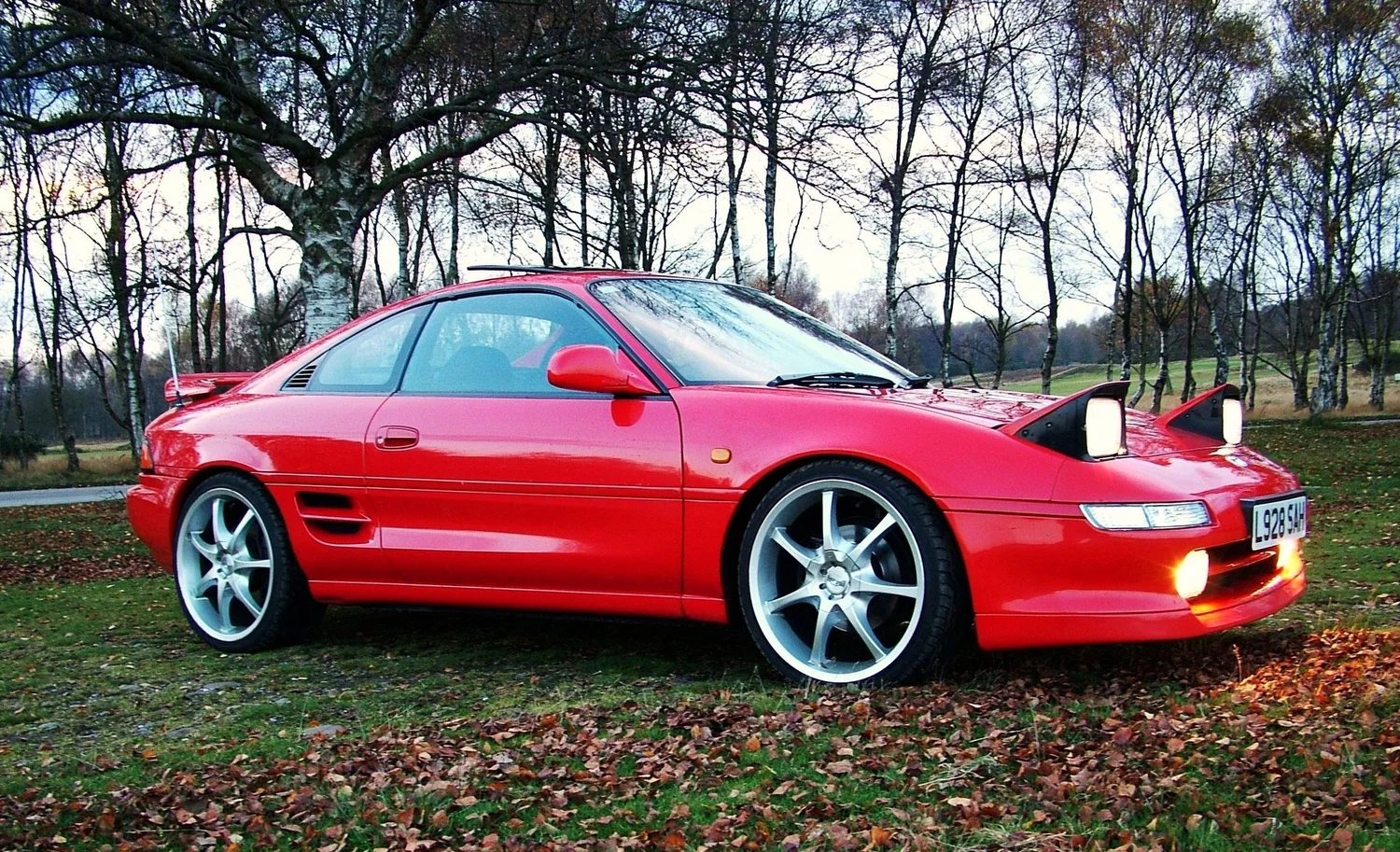
The Mid-Engine Difference
The MR2's defining characteristic is its mid-engine layout — the engine sits directly behind the driver, ahead of the rear axle. This gives the car a 47/53 front-to-rear weight distribution, which is close to ideal for a sports car and is why it handles the way it does.
- 47/53 weight distribution — near-perfect balance for cornering
- Mid-engine feel typically found only in purpose-built exotics
- Lightweight two-seat body — the SW20 weighs around 1,200 kg
- Fully independent coilover suspension with MacPherson struts on all four corners
- Pop-up headlights on pre-1994 models — one of the last JDM cars to use them
What's Under the Lid
The SW20 came with two engine options in the Japanese market. The turbocharged 3S-GTE is the one to hunt — it went through two generations during the SW20's production run, each meaningfully different.
- 2.0L DOHC 16v turbocharged inline-four
- Gen 2 (1989–1993): 225 PS @ 6,000 rpm
- Gen 3 (1994–1999): 245 PS — revised turbo, head & intake
- 5-speed manual only — no automatic on turbo models
- Air-to-air intercooler, side-mounted in the MR2
- Forged crank, piston oil squirters — built for boost
- 2.0L DOHC 16v naturally aspirated inline-four
- 165 PS initially; updated to 200 PS with VVT-i (1997+)
- 5-speed manual or 4-speed automatic
- Yamaha-designed cylinder head
- Lighter feel, more neutral than the turbo — still rewarding
Note: The 2.2L 5S-FE was offered in US-market cars only — you won't find it in Japanese auction stock. All JDM SW20s came with either the 3S-GTE or 3S-GE.
Which Year to Buy
The SW20 went through four distinct revisions during its 10-year run. The differences matter — particularly around the snap oversteer issue that was addressed in Rev 2.
-
Rev 1 · 1989–1991Original generationLaunch spec. 3S-GTE Gen 2 in turbo models. Known for aggressive snap oversteer behavior in the turbo — approach with experience. Pop-up headlights standard.
-
Rev 2 · 1992–1993Suspension fixToyota revised the suspension geometry, tire sizes, and power steering in direct response to snap oversteer reports. Significantly more predictable at the limit. The minimum recommended revision for most buyers.
-
Rev 3 · 1994–19953S-GTE Gen 3 + new stylingGen 3 3S-GTE arrives — 245 PS, revised turbo and intake. New front and rear styling, fixed headlights replace pop-ups. More power, better refinement.
-
Rev 4 · 1996–1999Final specMinor interior and equipment updates. The most refined version of the SW20. All remaining turbo cars use the 245 PS Gen 3 3S-GTE. Production ends in 1999.
What It's Actually Like
The MR2 delivers one of the most engaging driving experiences in its class — quick steering, excellent cornering, and strong turbo acceleration in a car that feels genuinely light and alive. It's not a grand tourer. It's a sports car that asks you to pay attention.
- Immediate, direct steering response — very little deadzone
- Excellent cornering grip — the mid-engine balance is felt in every corner
- Strong turbo acceleration once on boost — especially the Gen 3
- Lightweight feel that larger JDM sports cars simply can't replicate
- Snap oversteer potential on Rev 1 turbo models — Rev 2+ cars are significantly more benign
What They're Selling For
The MR2 remains one of the most affordable ways into JDM mid-engine performance. Clean turbo examples are rising — the window won't be open forever.
| Condition Tier | Price Range |
|---|---|
| Project CarsRunning, needs work or attention | $8,000 – $12,000 |
| Clean Turbo ModelsRev 2+, solid condition, documented | $15,000 – $25,000 |
| Low Mileage / Rev 3–4Gen 3 3S-GTE, excellent condition | $25,000+ |
Importing an MR2
All SW20 models (1989–1999) are now eligible under the 25-year federal import rule. Budget for these costs on top of the purchase price:
Know Before You Buy
The MR2 is 25–35 years old. Most issues are age-related and manageable — but the mid-engine layout makes some maintenance jobs more involved than a conventional car.
Rev 1 turbo models are the most demanding. Toyota addressed this in Rev 2 (1992) with suspension geometry changes. Buy Rev 2 or later if you're not an experienced driver.
Mid-engine cars rely on longer coolant lines. Hoses and the water pump deserve inspection — overheating is more consequential here than in a front-engine car.
Boost hoses, turbo inlets, and rubber seals age and crack over 30 years. Factor in a full hose inspection and likely replacement at purchase.
Mid-engine means the 3S-GTE is not easily reached. Simple jobs take longer. Budget for higher labor costs if you're not doing your own work.
Popular Modifications
- Coilovers — improve handling precision and dial out body roll
- Turbo upgrades — the 3S-GTE responds well; 400+ whp builds are common
- Intercooler upgrades — the stock unit is a bottleneck on higher boost
- Brake kits — the stock setup is adequate; upgraded calipers and rotors reward the chassis
- Boost controller — simple, effective first mod on any turbo MR2
- Exotic mid-engine driving feel
- Turbo performance that punches above its price
- Strong and active enthusiast community
- All years now import-eligible under 25-year rule